


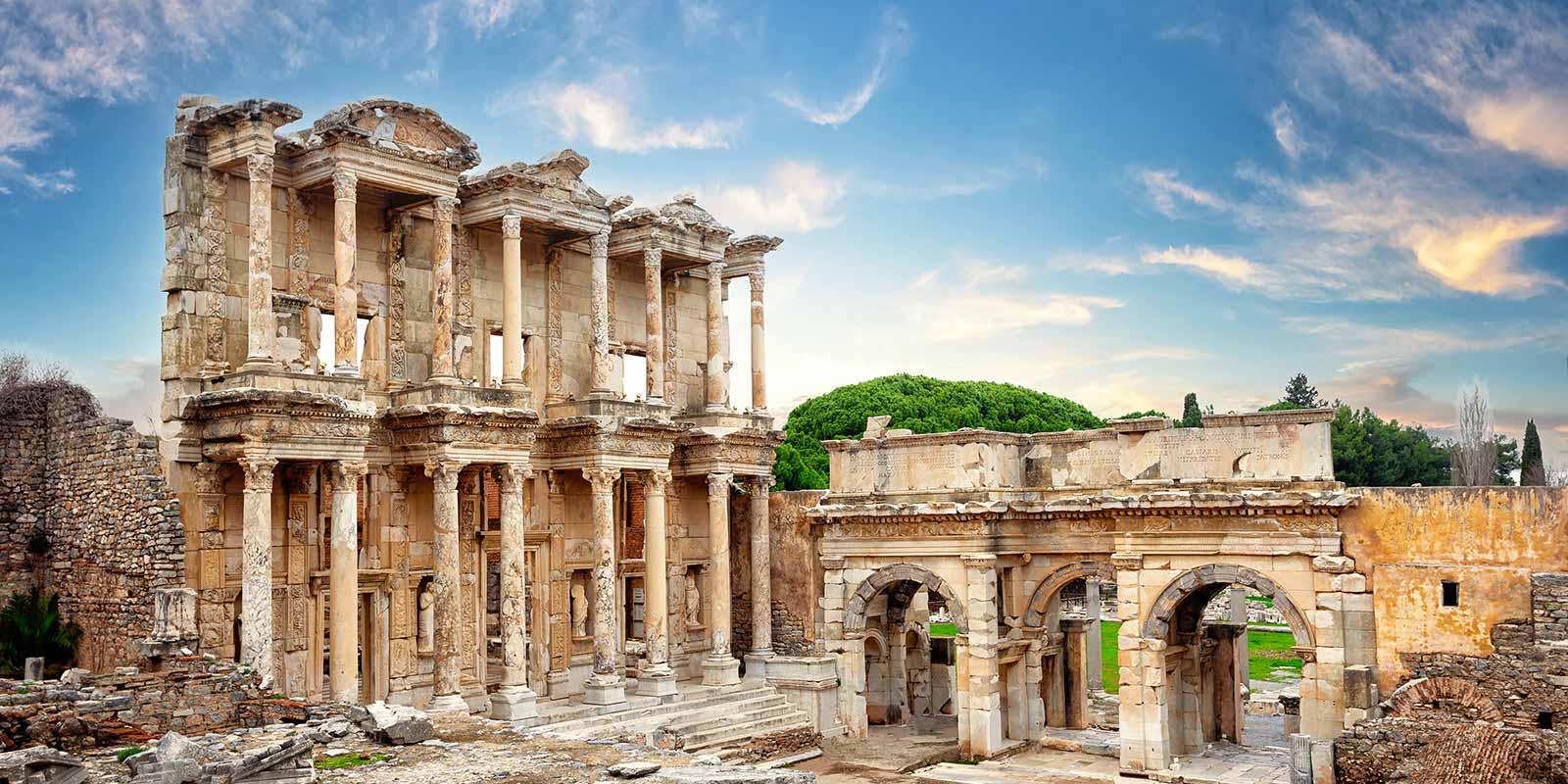
Ephesus, located on the Aegean coast, was one of the most important port cities of the ancient world. Known for its impressive ruins and historical significance, Ephesus highlights the blend of various cultures that developed here over the centuries.
Historical Significance and Key Attractions
- Founded: Ephesus is believed to have been established around the 10th century BCE.
- Cultural Hub: The city was a major center for commerce, culture, and religion. It was home to one of the Seven Wonders of the Ancient World, the Temple of Artemis.
- Roman Influence: Ephesus became a prominent city in the Roman Empire, serving as a vital hub for trade and communication.
- The Library of Celsus: A monumental building that housed thousands of scrolls and served as a tomb for Tiberius Julius Celsus.
- The Great Theatre: An impressive amphitheater that could seat up to 25,000 spectators and is known for its acoustics.
- St. John's Basilica: Believed to be the burial site of St. John the Apostle, this basilica reflects early Christian architecture.
Archaeological Importance
Ephesus is a UNESCO World Heritage Site, famous for its rich archaeological findings. Excavations have revealed extensive structures such as baths, temples, and public buildings, showcasing the architectural prowess of its time.
Today, Ephesus is one of Turkiye's most popular tourist destinations, attracting visitors who seek to explore its ruins and learn about its history.
Ephesus offers a fascinating glimpse into ancient civilization, marked by its cultural richness and architectural achievements.